LISTEN ON APPLE PODCASTS | LISTEN ON SPOTIFY | LISTEN ON AMAZON MUSIC
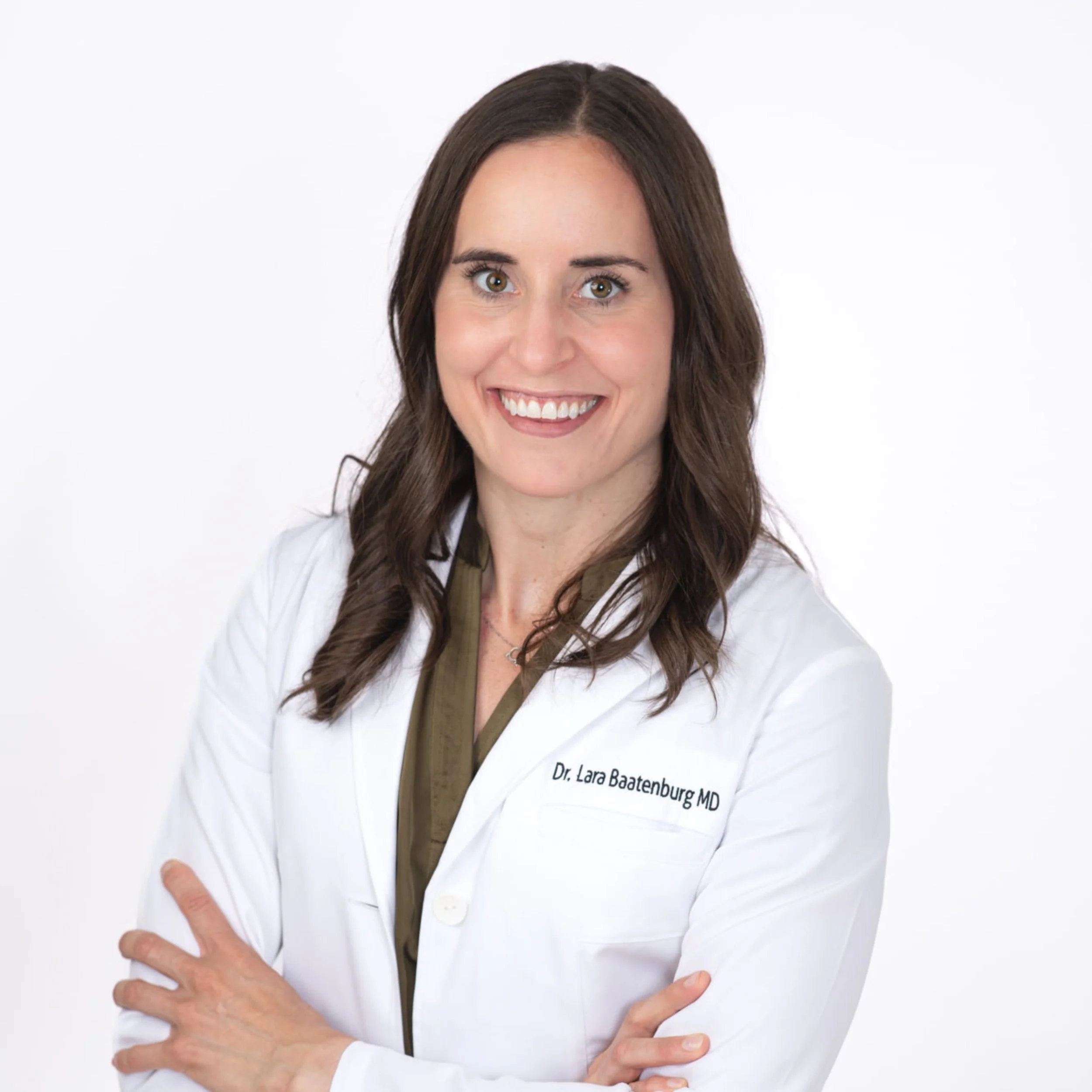
David Roden recorded this one in a rhinestone cowboy hat and Mardi Gras beads, which sets the tone: playful, a little silly, then quickly serious. He and Dr. Lara Baatenburg count down the moments that make a physician's stomach drop.
His opening point is what holds the episode together. Online health content runs on fear: toxins in your shampoo and doctors who supposedly don't know what they're doing. What scares a doctor is quieter and often boring. It's the thing that cracks while nobody connects the dots.
The headache with the words in it
A patient messaged Dr. Lara recently. They had talked about her headaches before, and Lara had asked to hear if they changed. Now she was having sudden 10-out-of-10 headaches, and she used the exact words. In medicine, it's called a thunderclap headache, and it means you have to quickly rule out something dangerous.
Lara sent her straight to Right Care Clinic. The patient is fine. She told Lara the staff there seemed worried, and Lara was glad she wasn't the only one. The harder version of this is when you can't reach the patient and spend the day thinking about it.
Chest pain is the same kind of call. There are many harmless causes, and some details can reassure you, but if you tell your doctor you have chest pain, expect to be sent to the emergency room or something similar.
The potassium that feels like nothing
Some of the scariest results come when the patient feels completely fine. Dr. Lara's example is a potassium of 5.8 coming back at 4:55 in the afternoon, when normal is under about 5. When it's that high, the person probably feels fine, but they could have a serious cardiac event if they aren't seen right away. You call, you explain, and you send them to the ER.
A related problem is that patients often see results before the doctor does. A result lands in the portal, the patient reads it in minutes, and the physician is in a room with another patient. Lara describes getting a message about a scan result she hasn't looked at yet. She'd prefer patients didn't see results first, but she says that's the way of the world now.
Blood pressure that feels fine
Another one Lara describes: a man whose blood pressure was around 200 over 100 at repeat visits. He wasn't worried and wouldn't take medication. About six months later, he had a stroke. She calls it terrifying and sad, because it was so preventable.
David puts it this way: most scary health scenarios play out over decades, not days. A high reading can feel fine for weeks, months, even years, until it doesn't. That's also what makes these problems fixable. That's why David finds it scary when people use the ER or urgent care instead of a primary care doctor. Lara adds that in many areas there's a primary care shortage, and not everyone knows how the system works. An ER visit is a one-off, and most of health is a long-term play.
The jar of pills
Lara has had patients bring in all their medications thrown together in a single jar. They think this one is the blood pressure pill. She says her first thought is how they're still alive, because if you can't tell which pill is which, how do you know you're getting the right dose? David wonders if you can just look up a pill. Lara says it's not that simple, and she wouldn't recommend that as a strategy.
Supplements raise the same worry. Patients come in on 15 to 20 supplements from different sources, and she has a hard time knowing what interacts with what or with their medications. David notes that some transplant medications interact with grapefruit, which shows how an everyday food or supplement can change how a drug works. Most people will probably be fine, Lara says, but you don't want to be the one who isn't.
Missing family history also makes a doctor's job harder. Adoption, estrangement, or a family that never talks about health can all leave gaps, and things like a parent's heart attack at 35 matter.
The colonoscopy that never got scheduled
In her old practice, Lara says, follow-up often happened months later. She remembers a patient with changes in bowel habits and fatigue whose labs showed anemia. She ordered a colonoscopy. A year later, at the next appointment, she asked if he'd done it. He hadn't.
David mentions that the prep is a real hurdle for some people. Lara says most people assume they don't have a problem, which is probably true, but you don't want to be the one who does.
The newer worries: AI and peptides
Two modern risks came up. The first is patients looking up their symptoms or asking AI, which Lara doesn't find scary on its own. What worries her is when they act on it. If AI said so and they try it, that becomes a safety issue.
The second is unverified peptides bought online. David describes a person close to them who came in struggling with their health and wanted help, but didn't want to hear about sleep, nutrition, and alcohol. They preferred a peptide a friend was taking, whose blood work had improved. David pointed out that the friend had also lost weight, and weight loss itself often explains the better numbers. The person's reply was that they'd put worse things in their body.
Lara says the irony is that some of the people most careful about what they eat and touch are the same ones asking for a barely studied injection. She'll wait for the research, and she says the harm also comes from focusing on the wrong thing instead of the exercise, food, and sleep that help. David asks whether it's better to prescribe a medication like a GLP-1 for someone who would otherwise buy it online, and Lara says that for the right person they sometimes do.
The lighter side
Not everything was grim. Lara says that when she worked in a large office, bed bugs sent the medical assistants into full panic, and the whole room had to be sanitized after the patient left. She admits she isn't fond of any bugs herself. She says the scariest part of a vacation is coming back to an inbox no one covered. She sometimes needed an extra day off to work through it.
Stay informed, not afraid
Lara doesn't want people living in fear about their health. She wants them to be careful and to talk to a good doctor. She says a good primary care physician walks a patient through the risks and benefits of what they're hearing about online. That takes time. Patients often tell her another doctor just said no, and when she has time to explain the reasoning, it makes sense to them.
David's final request: please don't put all your pills in one jar and bring them to your doctor.
This episode is for educational purposes only and isn't individual medical advice. If you have sudden severe symptoms, call your doctor or seek emergency care.
What if your doctor read your message the day you sent it? Schedule a complimentary Meet & Greet with Dr. Lara or Dr. Jana Baatenburg and see what it’s like to have someone who has the time to take your worries seriously.
Vitals & Values is the podcast of Concierge Medicine of West Michigan, hosted by Dr. David Roden and Dr. Lara Baatenburg. New episodes available wherever you listen.