LISTEN ON APPLE PODCASTS | LISTEN ON SPOTIFY | LISTEN ON AMAZON MUSIC
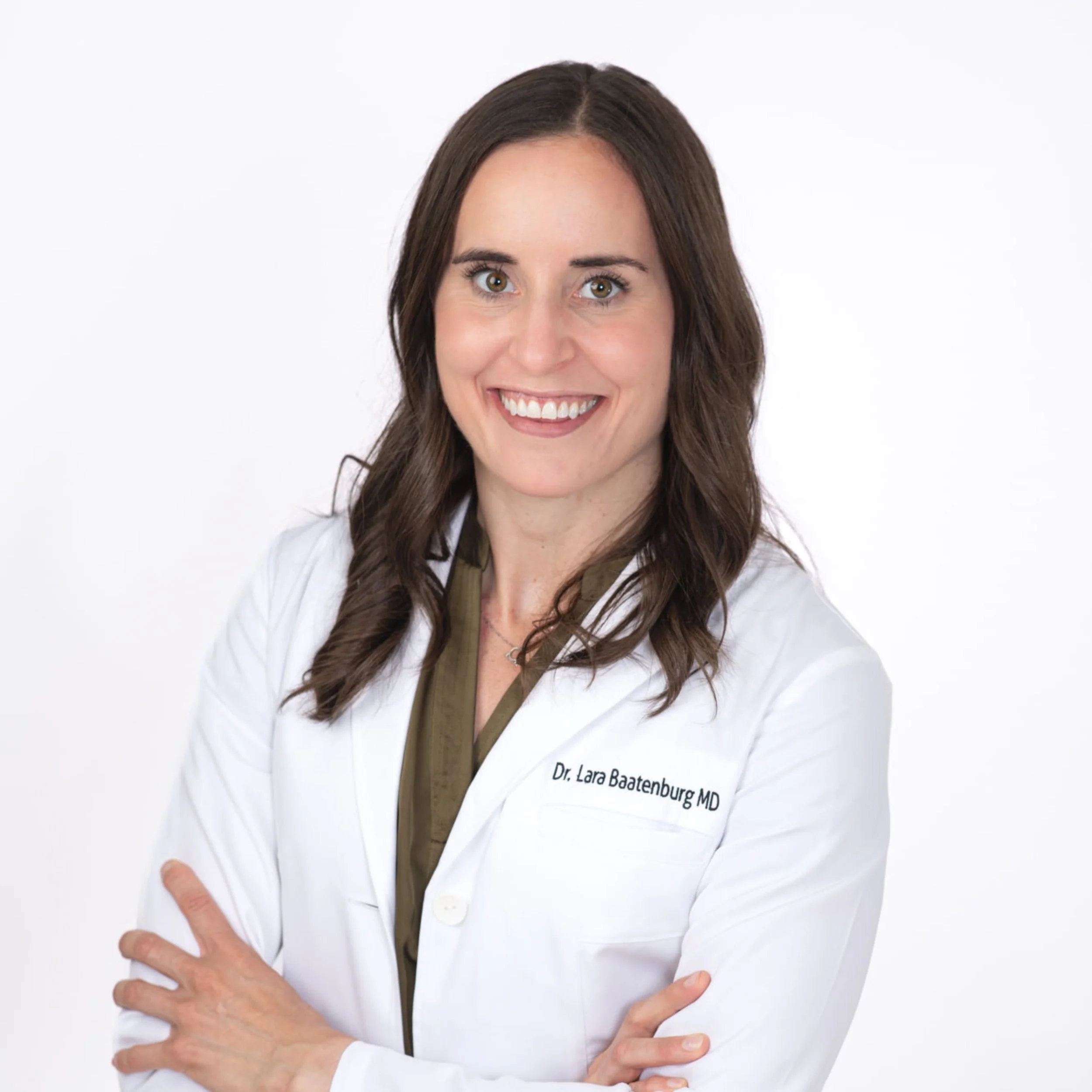
For about 15 years, Dr. Lara Baatenburg ran. She and her sister, Dr. Jana, kept running after high school because they didn’t want to give it up, and they were running six days a week by the time they got into medical training. Dr. Lara thought she was doing everything right for her health.
Then she picked up a barbell. In this episode, she and David Roden talk about what that changed, both in her own body and in how she talks to her patients.
Why muscle is a health organ
David’s framing is that muscle isn’t a vanity project. Dr. Lara agrees and starts with metabolic health. Muscle helps store glucose and keep blood sugar steady, and she sees it in her office: thin patients with low muscle mass who develop prediabetes. Muscle also stresses bones, which keeps them strong, and David points to astronauts, who lose bone density and muscle after just two weeks in space because the body drops what it isn’t using.
David also mentions a large meta-analysis linking stronger grip to lower all-cause mortality. He’s quick to say that’s an association, not a reason to buy a hand squeezer. Stronger people tend to be more capable overall.
The part Dr. Lara wants people to hear is that muscle isn’t static. It’s broken down and rebuilt all the time, and without stimulation, you slowly lose it starting around your 30s. By the time people hit their 50s and stop strength training, the knee pain, back pain, and injuries start to make sense.
Weight isn’t the whole picture
Dr. Lara has an InBody scale in her office, and many patients don’t realize it does more than weigh them. It estimates body fat and muscle mass, so she can show someone where their weight is actually coming from. A thin patient who assumes she’s healthy because of her size can see the low muscle mass that might explain her blood sugar. Both hosts say body composition tells you more than the number on the scale.
Fifteen years of running, and the CrossFit class
Dr. Lara’s sister heard about CrossFit on a podcast, and on their 34th birthday, they went to a class. The first workout was cardio-based and fun. The second class they remember is the one where everyone around them lifted a barbell overhead and dropped it, and they stood in the back wondering what they were looking at. They were strong runners and weak lifters, and that was a humbling place to start. She says it helped that she had no expectations.
Over the next five years she gained at least 30 pounds. She estimates her deadlift went from about 160 pounds to roughly 270, and her back squat from about 110 to around 200. She also noticed that being around people who cared about muscle changed what she wanted. For years she thought she’d look better if she just lost a little more weight. She now says gaining muscle makes you look better, and it’s a lot more fun than restricting food.
She doesn’t regret the running. She built a cardiorespiratory engine that she still has, and she and David are both clear that cardio isn’t the villain. David’s rule of thumb is that you can build a strength program that supports your heart, but a cardio workout can’t build strength.
Why more muscle can mean eating more
David makes the case that muscle supports sustainable fat loss. He estimates each pound of lean muscle burns a few extra calories a day at rest, so a few years of steady gains can add up to a meaningful difference. He points to his own maintenance calories, which have risen as he’s built muscle.
Dr. Lara describes the trap on the other side. Many women keep cutting food to lose weight, lose muscle along the way, and watch their maintenance calories drop until they feel like they can’t eat anything without gaining. The way out is the hard thing to hear: they have to gain weight, in the form of muscle. David adds that if weight loss is mostly muscle, you can end up looking worse while the scale goes down.
What actually builds it
David says it comes down to progressive overload: moving a muscle safely through its range of motion and increasing the load over time, taking sets close to failure. He says research shows that sets in roughly the five-to-thirty rep range work if you push close to failure, so the obsession over rep ranges doesn’t matter.
Dr. Lara’s concern with new patients is that they won’t go heavy enough or work hard enough. Five-pound dumbbells and a few half curls won’t do it. David says most people quit mentally long before their muscles do, which is why he likes working out with someone the first time, and why he recommends a trainer or a friend with real results. Keep sets safe for your joints. And soreness isn’t the sign you did it right. Tracking your weights and reps is a better measure, because getting stronger is the goal.
Protein, and how much
You can stimulate muscle, but you also have to give it the building blocks. David and Dr. Lara suggest a starting point of about 0.7 grams of protein per pound of lean or ideal body weight, with some people aiming up toward 1 gram. David stresses that it’s based on lean mass, not total weight, so someone who weighs 330 pounds doesn’t need 260 grams.
A few practical points came up:
Timing isn’t critical. The idea that you lose your gains if you miss a post-workout window has been debunked, David says. Spreading protein over the day does make it easier, though, and three solid meals will get most people close. Dr. Lara says people who save it all for dinner struggle to hit their number, and that one-meal-a-day eating makes it very hard. If the number feels overwhelming, she suggests starting lower and building up.
Variety matters more than precision. Eggs, beans, legumes, lean meats, and whey together cover the amino acids you need. David also points out that peanut butter is a great fat source and not a great protein source, despite what the label suggests.
Prioritizing protein is also a useful tool in weight loss, since it’s filling. David has had clients who struggled to eat enough calories because they were trying to hit their protein goal.
Sleep, and not waiting for perfect
Sleep matters for muscle building and for just about everything else, and most people don’t get enough. Dr. Lara adds a counterpoint she likes from a fitness creator who has young kids: don’t skip strength training because your sleep is poor, or no parent would ever lift. The stimulus is still the main thing.
Strength training on a GLP-1
Dr. Lara talks to patients about this before she starts anyone on semaglutide or tirzepatide. The medications make it easier to eat less, which can mean too little protein, and some muscle loss happens whenever people lose weight, whether by medication or another way. The goal is to preserve as much muscle as possible through strength training and adequate protein. David puts it this way: the drug isn’t the problem, but starving yourself into weight loss isn’t a plan for health.
Barriers, and the person you want to be
David and Dr. Lara talk through the usual obstacles. Gym intimidation is real. Dr. Lara says she was nervous about walking into her CrossFit gym every day for about three months, even though everyone was welcoming. David’s view is that most people are too busy with their own workouts to look at yours, and big box gyms are a fine place to start. Her own 67-year-old mother joined a CrossFit gym, which she offers as proof that anyone can.
Cost is a real barrier for some of her patients, especially in her residency clinic days. Time is the one David pushes on hardest, and he says a hard 25-minute session beats a long, easy one. Dr. Lara adds that if it’s important enough, you’ll find the time, and that the biggest barrier is usually the person’s own mind. A basic home setup can work, but most people need real weights, and she thinks it’s harder to get in the right mindset in your living room.
Their challenge for the week: picture who you want to be in 10 years, then make a plan today to get there. Don’t wait until you’re less busy.
This episode is for general education. Talk to your own doctor before starting a new exercise program or changing your diet.
Want a physician who looks at your muscle mass and not just your weight? Schedule a complimentary Meet & Greet with Dr. Lara or Dr. Jana Baatenburg and talk about building a plan for the person you want to be in ten years.
Vitals & Values is the podcast of Concierge Medicine of West Michigan, hosted by Dr. David Roden and Dr. Lara Baatenburg. New episodes available wherever you listen.