LISTEN ON APPLE PODCASTS | LISTEN ON SPOTIFY | LISTEN ON AMAZON MUSIC
Doctors get told to suck it up. So do patients. Dr. Todd Otten spent years doing exactly that, until he couldn’t anymore. He is a family physician, a former Navy flight surgeon, and an executive producer of the documentary Suck It Up, Buttercup: Trust & Betrayal — Healthcare in America.
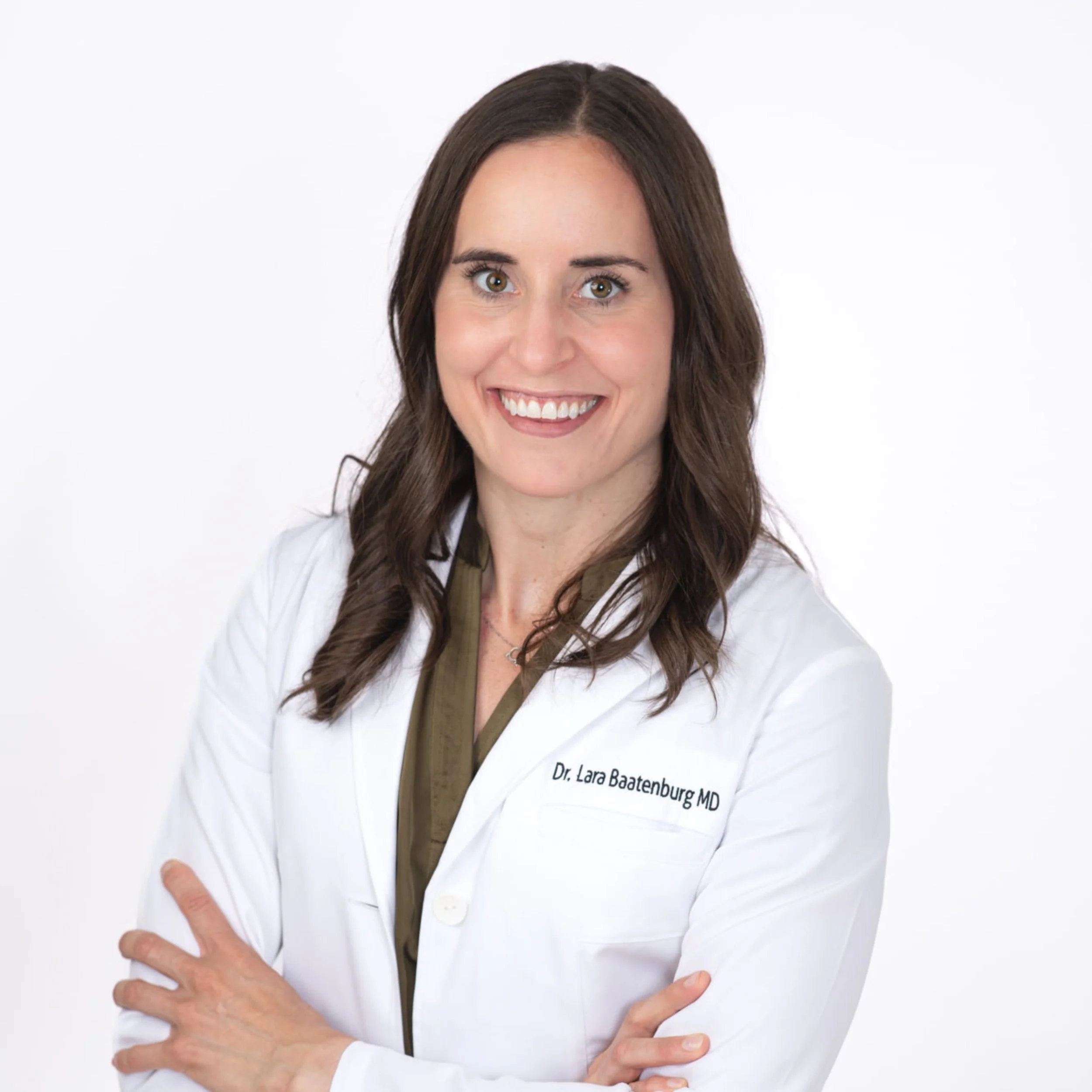
He sits down with Dr. Lara Baatenburg and David Roden to talk about how he got burned out, what he did next, and why he now thinks the fix has to include patients as well as doctors.
From trauma surgery to the flight line
Dr. Otten finished medical school in 2002, planning to be a trauma surgeon. His internship came just before the 80-hour work limits, and he describes some of the training as close to sadistic. So he changed course. In the Navy, he trained as a flight surgeon, which he points out is really primary care. He looked after about 500 people in a squadron, and he fell in love with the work.
After the service, he did residency and spent 13 years at a critical access hospital in the fee-for-service world, taking on leadership roles along the way.
What burnout looked like
In 2019, he hit what he calls classic, severe burnout. He had always loved seeing patients, and he hated going to work. He remembers standing in his backyard in tears. Looking back, he lists lack of empathy, anger, frustration, and a lost sense of worth. The worst part, he says, was that his patients weren’t getting his best.
The recovery took a couple of years, and he calls it a continuum, not a finish line. Therapy was a big part of it, and writing a book about the experience helped. So did teaching, because his open-door policy meant mentoring nurse practitioners while still seeing 20 to 25 patients a day.
By 2022, he was running a clinic that was going well. Then, after a larger system absorbed his organization, he was told he’d be moved back to the role that had burned him out, with no warning. He resigned the next morning after nearly 13 years, and others followed him out the door. He has told the longer version of that story in his book.
The paperwork problem
Dr. Otten and Dr. Lara compare notes on what changed in medicine over their careers. He remembers paper charts. At a hospital board meeting he once told an older colleague, who liked to say young doctors weren’t as tough, that the colleague wrote his whole note on a three-by-five card and today’s notes for a cold run 17 pages. Nobody said anything after that.
His comparison for the electronic record: imagine an airline pilot flying the plane while also writing up the flight, listening to the navigator, and acting as flight attendant. He says it turns your most valuable resource into a data entry clerk. For a while he filled out prior authorizations in crayon with a smiley face, and he says every one of them got approved. Dr. Lara adds that half her old job could have been done by someone with a clipboard asking a few questions, and the things patients actually cared about never got addressed.
Why direct primary care
After stepping away from full-time clinic work, Dr. Otten wasn’t looking for a job. Then he was asked to be medical director at Plum Health, a direct primary care practice, and he realized he missed caring for people. His panel is about 500 and he sees roughly 10 patients a day. He says he was messaging patients he was worried about the day before the interview, with no visit scheduled, and they were grateful for it.
His description of the model is simple. It removes the middle layers between a physician and a patient. When a visit is over, the patient doesn’t have to stop at a desk and ask what they owe. Some patients even ask him if it’s a Ponzi scheme, until he explains that the practice doesn’t have 25 people sending claims and assigning codes.
Dr. Lara tells a similar story. Patients kept telling her in small ways that the old system wasn’t meeting their needs, and she wanted to see what she could do about it. Both of them also address a criticism they’ve heard, that leaving the traditional system takes doctors away from the patients who need them. Dr. Otten went from about 6,000 visits a year at his peak to zero. He’d rather be seeing people in a different model than seeing no one.
Why more doctors don’t leave
David asks why so few physicians make the jump. Dr. Otten gives several reasons. Many doctors don’t understand direct primary care or concierge care. Financial fear is real, and the model is new. There’s also the weight of student debt. He says many physicians don’t pay off their loans until their 50s or 60s, and it can feel like a mortgage stacked on a mortgage. Then there is the culture: shame is built into medical education, and colleagues who step outside the usual path are sometimes made to feel bad for it.
Learned helplessness
The phrase he returns to is learned helplessness. He describes the old study where a dog is shocked in a closed cage, and even after the door is opened the dog just lies there. A lot of clinicians feel the same way, he says: I’m one person, if I speak up I might lose my job, what does it matter?
The film’s call to action has two parts. One is to unlearn that helplessness, because your words and actions count, even if it’s only how you treat a colleague. The other is to build what he calls an impact network, a way for people to share stories and work on solutions together.
What’s in the film
The documentary started as a look at physician burnout and suicide, based on a fellow physician’s book, and grew into a broader look at how greed is affecting healthcare. It includes physicians, nurses, patients, former executives, and well-known voices like Mark Cuban and physician-comedian Dr. Will Flanary and his wife, Kristen. Dr. Otten says about the first three-quarters of the film lays out the problems, including private equity, insurance, and PBMs (pharmacy benefit managers). The last 20 minutes focuses on what’s working, with around 20 calls to action. Filming began in November 2024, and the film was finished in March 2026. At the time of recording it was days away from being available on demand.
He also tells a few stories from the film. One is of a pediatrician who spent 25 years building a practice, sold it to private equity during COVID, and was then fired from it. Another is about a radiologist who was given a metronome to set the pace for reading images. A third is about a small group of emergency physicians in Eugene, Oregon, who took on a corporate employer and won.
Private equity, without the villain
David points out that no single player caused this, and that patients play a part too. When he asks about a federal ban on private equity in healthcare, Dr. Otten is careful. Private equity, he says, generally comes in highly leveraged, takes out profit, and cuts staffing, and studies link that to worse care. A ban would put more clinicians in decision-making roles, which he thinks is the biggest potential benefit. He doesn’t say it’s all bad, though, and a blanket ban could hurt some situations where private equity is helping. Rural hospitals, meanwhile, are closing at a pace he describes as weekly.
David adds that fixing healthcare will take a little from everyone. His example is GLP-1s: if half of America were on one, the numbers wouldn’t work for insurers, even if the price came down by two-thirds.
What patients can actually do
When Dr. Lara asks how a patient gets involved, Dr. Otten starts small. Thank your doctor and ask how they’re doing. A physician notices that, he says. Send a thank-you card. After that, patients can get involved in local ballot proposals or community healthcare action plans, support a nonprofit, or watch the film and learn something. People don’t know where to put their energy, he says, so he wants to give them places to start.
He asks that viewers go in with an open mind and an open heart, since parts of the film are heavy. And he asks everyone to be kind and check in on colleagues. Dr. Lara agrees. She worked in an office where she rarely talked to the people down the hall.
If you’re a clinician who is struggling, you’re not alone. Call or text 988.
Want a doctor who checks in on you without a visit on the calendar? Schedule a complimentary Meet & Greet with Dr. Lara or Dr. Jana Baatenburg and see what care looks like when your physician has the time.
Vitals & Values is the podcast of Concierge Medicine of West Michigan, hosted by Dr. David Roden and Dr. Lara Baatenburg. New episodes available wherever you listen.