Overcoming Lipedema: Seven Surgeries and a New Life
LISTEN ON APPLE PODCASTS | LISTEN ON SPOTIFY | LISTEN ON AMAZON MUSIC
Overcoming Lipedema: Seven Surgeries and a New Life
Cara spent years being told the wrong things about her body. That the swelling would go away if she tried harder. That it was a weight problem. That she needed to be more disciplined. None of it was true — and none of it helped — because what Cara had was lipedema, and nobody told her that for a long time.
In this episode of Vitals & Values, she walks through the full journey: the years of misdiagnosis, what seven surgeries looked like in practice, and what actually changed when she stopped trying to treat a physiological condition with willpower.
What is lipedema?
Lipedema is a chronic condition where abnormal fat tissue accumulates — typically in the legs, hips, and buttocks — in a way that's painful, disproportionate to overall body weight, and resistant to diet and exercise. It almost exclusively affects women. Estimates suggest it affects roughly 11% of women worldwide, yet it's still routinely missed in clinical settings.
The fat tissue itself is structurally different from ordinary adipose tissue. It's tender to the touch, bruises easily, and doesn't respond to caloric restriction the way a physician might expect. That last part is important — it's a big reason why so many women with lipedema spend years being told the problem is behavioral when it isn't.
Why does the diagnosis take so long
Lipedema doesn't appear in most medical school curricula with any depth. Research funding has historically been limited. And there's a well-documented pattern of attributing women's symptoms to lifestyle choices rather than investigating further. Women with lipedema often cycle through general practitioners, dietitians, and exercise programs for years before anyone names what they're actually dealing with.
By the time Cara got her diagnosis, the condition had progressed significantly. Surgical intervention wasn't a preference at that point — it was necessary.
Seven surgeries: what that actually means
The number 7 surgeries tends to stop people. For Cara, it was a staged approach to a condition that had been progressing untreated for years. The procedures — a form of liposuction adapted for lipedema tissue — addressed the abnormal fat accumulation that nothing else had been able to touch.
The results went beyond physical appearance. Pain that had been constant became manageable. Mobility improved. The body she was living in began to work with her. She's clear that recovery was real and the process was long. But it worked in a way that nothing before it had.
Diet, lifestyle, and what actually moved the needle
Surgery was part of Cara's answer, not the whole answer. Cutting sugar significantly produced rapid changes in inflammation — weight that hadn't shifted in years started to move. Not because she hadn't been trying before, but because she was finally addressing the actual condition.
Movement helped too. The lipedema community tends to find that low-impact exercise — walking, swimming, rebounding — supports lymphatic drainage without aggravating symptoms, unlike high-impact workouts. There's no universal protocol. What works depends on the stage of the condition, the individual's overall health, and what other interventions are in place. That complexity is exactly what gets lost when lipedema patients receive generic lifestyle advice.
What community meant in this process
Cara talks in this episode about finding people who understood — who had been through the same diagnostic wilderness and come out with answers. The lipedema patient community has become a meaningful resource for women whose own physicians don't have strong awareness of the condition.
Better medical education and clinical recognition are real gaps here. Lipedema isn't rare. It's under-recognized. Those are different problems.
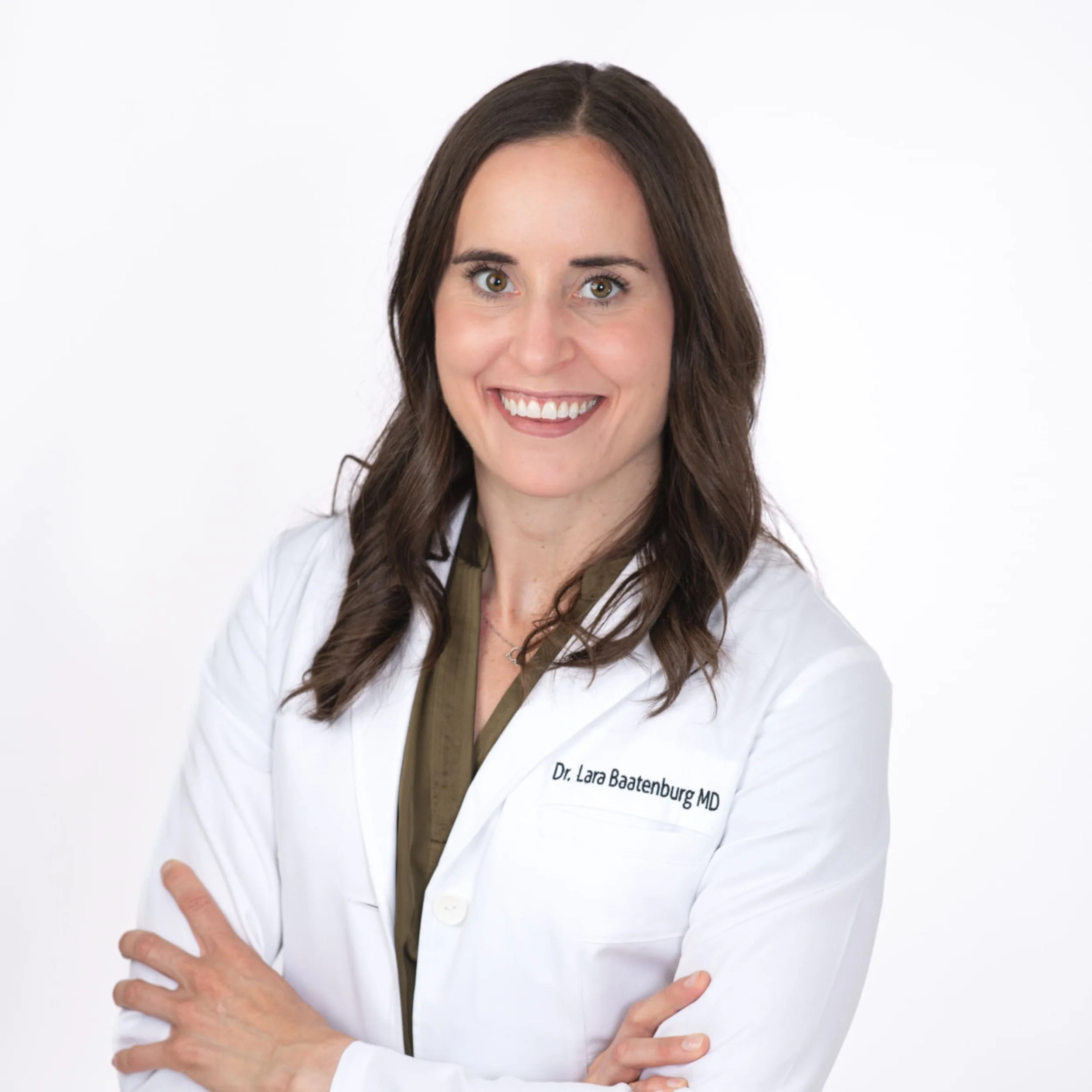
Vitals & Values is the podcast of Concierge Medicine of West Michigan, hosted by Dr. David Roden and Dr. Lara Baatenburg. New episodes available wherever you listen.