LISTEN ON APPLE PODCASTS | LISTEN ON SPOTIFY | LISTEN ON AMAZON MUSIC
Dr. Jana Baatenburg knew about the female athlete triad. She says she wasn’t overly concerned, and that having no period was a little convenient. It stayed that way for almost 15 years.
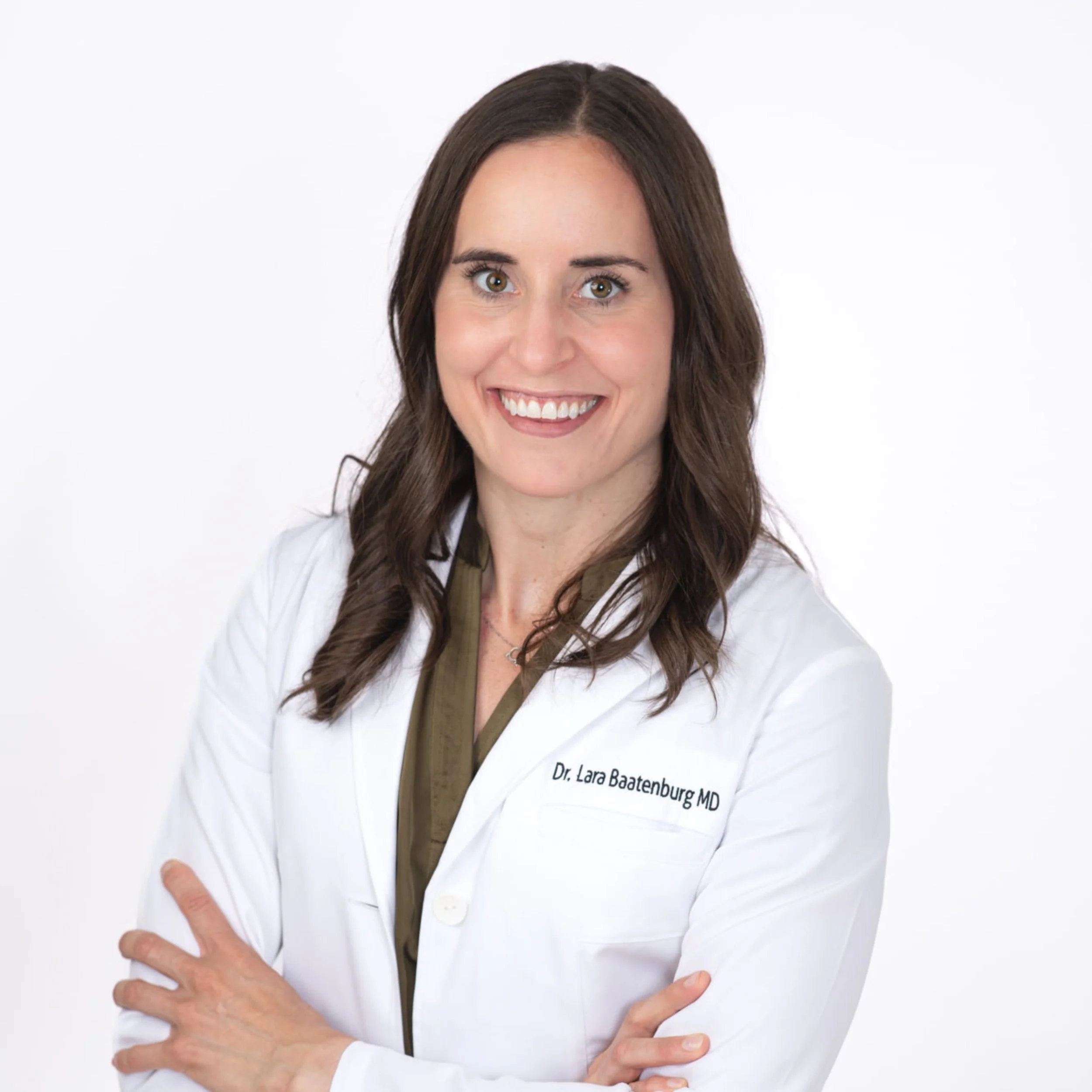
In this episode, Jana sits down with Dr. Lara Baatenburg and David Roden to talk about RED-S, two stress fractures, and the slow, uncomfortable work of eating more. David and Lara open by pointing out that under-eating can hurt too. As Jana puts it, “it can be also incredibly harmful to be on the opposite side and be under-eating.”
How eating less became the plan
Growing up, Jana heard family and peers comment on other people’s weight, and the “freshman 15” was something to avoid. In her third year of college, living in her own apartment, she deliberately started eating less to lose a few pounds. She ran about 40 minutes most mornings, six days a week, often fasted.
Around age 20, her period stopped. It didn’t return until her mid-30s. She says amenorrhea is more common than people realize, and that many of the athletes she meets have a similar story.
What RED-S is
The female athlete triad has three parts: low energy availability, menstrual dysfunction, and decreased bone density. RED-S, short for Relative Energy Deficiency in Sport, was introduced in 2014, Jana says, as a wider version of the triad. It affects men as well as women, though it is easier to spot in women because their periods change.
The core problem is a mismatch between the energy a body takes in and the energy it needs. When that gap is big enough, the body shuts down what it considers non-essential, and reproduction is one of those things. Jana compares the hormonal shutdown to the energy demand of pregnancy.
The effects reach beyond periods. She lists gut trouble like IBS-type symptoms, thyroid problems, more frequent infections, a drop in athletic performance that often shows up late, and anemia or iron deficiency, which she calls pretty common. Bone loss can be silent. Some women develop osteoporosis as teenagers or in their 20s, and others find out years later.
Jana had none of the gut, immune, or brain symptoms, which is part of why the missing period was so easy to ignore. She also says you don’t have to be underweight to have RED-S, and anyone who is physically active every day can be affected. In her words, that person is an athlete.
The first fracture
At 34, Jana and Dr. Lara tried CrossFit and then joined a gym. Jana discovered she was very skinny, had little muscle, and was weak. Some of her identity was tied to being a thin runner, which made change harder, but she decided to eat more and gain weight in order to get stronger. She had been skipping lunch and feeling proud of it. Now she added protein and bigger meals.
Her body image took a hit. She felt puffy, and she and the hosts agreed that comments about weight do harm. Her period still didn’t come back, which frustrated her.
Then, during a six-mile run, she felt a sharp pain in her foot a quarter mile from home. She trained through it the next day with a jump-rope workout. An X-ray showed a fracture in one of the metatarsal bones of her foot. “You can’t outrun this anymore,” she says. She had read about RED-S and bone stress injuries and still believed she was immune after so many years without a problem. It is not normal, she says, to break a bone from running.
Getting help and getting her period back
Jana took time off running and focused on upper-body lifting. She decided to put getting her period back first and hired an online sports dietitian. The program meant tracking her intake, hitting targets, following recipes, and eating specific snacks. Some of it felt like force-feeding. Telling herself to eat more was the hardest part, and she describes herself as very coachable, so outside structure helped. Gaining weight again was distressing.
Her period came back about three months in. The next cycle took 90 days, then 60, then 40, and regular monthly cycles took about six months to settle in. They have been regular since.
David shared advice he read online: stop exercising completely during recovery. Jana says that wasn’t right for her. She couldn’t give up exercise mentally, so she cut back on intensity instead. She adds that this is not medical advice, and that in extreme cases, stopping exercise may be necessary.
The second fracture and the bone scan
About a year later, hip pain began. Jana first thought it was a strained muscle and tried physical therapy, then the pain changed. Based on her own reading, she suspected a stress fracture. An orthopedic visit suggested therapy and an injection, with impingement or a labral tear as possible causes. She asked for an MRI, and it confirmed the stress fracture.
This one was harder than the foot, because she had thought she was healthy. Her period had only been regular for about six months.
She also had a bone density scan. The result was normal, though on the low end of normal, and she plans to repeat it because she wants stronger bones than that. She says she should have had one much earlier and recommends it for anyone with these risk factors.
A period on birth control isn’t the same as recovery
Jana says young athletes are often given birth control pills to bring on a period. “The research shows that the birth control pill does not protect your bones,” she says. She isn’t calling it evil. In this situation, she says, it masks the problem. The root treatment is restoring energy availability. If that is too slow, she says guidelines suggest an estradiol patch with progesterone, though she has never seen it done.
Dr. Lara points out that a seven-minute visit is unlikely to cover any of this. Membership-based medicine allows 30- to 90-minute visits. Jana adds that recovery may take several visits, and that gaining weight is often the hardest mental step for patients.
“It’s not ever normal to stop having a period,” she says. RED-S is a real problem, and she notes that many physicians don’t recognize it. She recommends building a team: a physician, a dietitian, and possibly a sports or other psychologist. The emotional stretch, the puffy phase, and the crying are hard, but it gets better. She now feels better about her body and her strength than ever.
She also asks everyone not to comment on weight. “Please don’t comment on weight, ever. It’s not necessary.” And if something feels off, ask for help.
This episode is for educational purposes only and isn’t individual medical advice. It discusses disordered eating and exercise. If you or someone you love is struggling, the National Alliance for Eating Disorders helpline is 866-662-1235. In a crisis, call or text 988.
A missing period deserves a real answer. Schedule a complimentary Meet & Greet with Dr. Lara or Dr. Jana Baatenburg.
Vitals & Values is the podcast of Concierge Medicine of West Michigan, hosted by Dr. David Roden and Dr. Lara Baatenburg. New episodes available wherever you listen.