“The Lie of Overnight Transformation” | Why Real Health Takes Time
LISTEN ON APPLE PODCASTS | LISTEN ON SPOTIFY | LISTEN ON AMAZON MUSIC
Here's how before-and-after culture actually works. Someone shows you a picture of themselves at 18 and a picture of themselves at 34. Dramatic difference. Inspiring. And somewhere in the caption, a timeline that has nothing to do with reality.
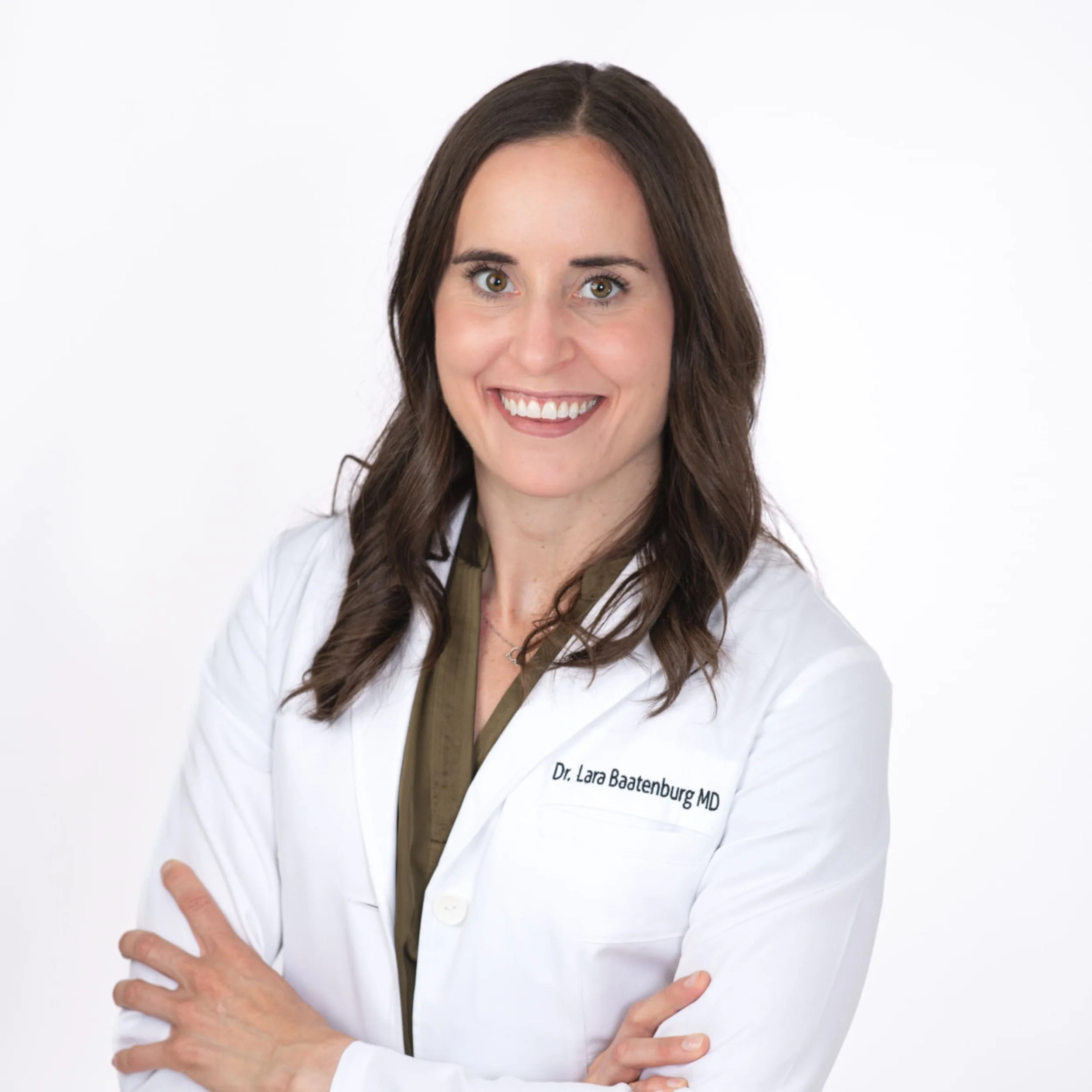
David has done it himself. His transformation took 14 years. Social media wants to compress that into six months. In this episode of Vitals & Values, he and Dr. Lara Baatenburg unpack why that compression is one of the most damaging lies in health and wellness — and what sustainable change actually looks like from both sides of the exam room.
How the illusion gets built
The before-and-after photo is the oldest trick in the influencer playbook, and it works because it hijacks something real. Real transformation did happen. The work was genuine. But the implied timeline — the suggestion that what took a decade of consistency could be yours in a few months — is fiction.
David is a member of the National Weight Loss Control Registry, which requires maintaining at least 10 to 20 percent of body weight loss for a minimum of three years. He's maintained over 40 percent for 14 years. He's also careful about the number: he doesn't say he lost 200 pounds anymore. He lost 200 pounds of body fat. He's gained roughly 30 pounds of muscle over the last decade, which means the scale tells a different story than the composition does. That matters, and it's exactly the kind of nuance that disappears in a single photo comparison.
Dr. Lara sees the same illusion from the clinical side. Patients come in having gained 40 or 60 pounds and describe it as though it happened suddenly — nothing changed, and then there it was. But weight doesn't accumulate overnight. It moves slowly in one direction for years before anyone names it as a problem. Going back is the same process, at roughly the same pace, and people aren't prepared for that.
GLP-1 medications and the baseline
Dr. Lara uses GLP-1 medications in appropriate patients and believes in their use as a tool. She also notices what they've done to expectations. She'll walk into an appointment with a patient who's lost 10 pounds in six to eight weeks — legitimately good progress — and the response is flat. Not unhappy, but... wanting more. The medication that would have seemed miraculous a decade ago now feels insufficient because cultural expectations have shifted.
That's not a criticism of patients. It's a description of what constant exposure to extreme transformation content does to a person's internal benchmark for normal progress.
The cardiovascular disease you can't undo
The slow-build problem goes in the other direction, too, and this one carries real stakes. Atherosclerotic plaque — the buildup inside arterial walls that leads to heart attacks and strokes — develops over years of high cholesterol levels, high blood pressure, and inflammation, quietly doing damage. By the time it's detectable, it's not reversible. No consistent study has shown that existing plaque can be cleared. The best available strategies can slow its progression. They can't undo what's already there.
David says it plainly: you do not reverse cardiovascular disease. Once you have it, there's no going back.
This is why Dr. Lara talks to her patients about prevention as a now problem, not a later problem. A coronary calcium score of zero at 35 is not permission to stop caring about lifestyle. It's an asset worth protecting. The goal is to keep it at zero, and that requires decisions to be made today, not after the first concerning lab result.
The detox cycle and what it's actually doing
David has friends whose health pattern runs like this: drink too much, liver enzymes climb, do a cleanse or an alcohol detox, enzymes come back down, resume drinking. They feel like they've done something. They haven't. The enzymes returning to normal is the liver recovering from the insult, not the person building a healthy relationship with alcohol.
This is diet culture's core mechanism — a cycle between behavior and reset, calling the reset a strategy, and never actually addressing the underlying pattern. Detoxes, 30-day challenges, reset protocols: these produce a temporary signal of progress while leaving the root behavior untouched.
The five-year question
David asks this question to people working on weight loss: would you rather lose 200 pounds in 12 months — hit the milestone, feel the high, and have no real framework for maintaining it — or spend five years losing that same 200 pounds and never go back?
Most people intellectually know the answer. Most people still want the 12 months.
The research, for what it's worth, doesn't actually show that faster weight loss produces better long-term outcomes. The pace matters less than the systems built around it. What keeps weight off isn't the method of losing it — it's the identity, the routine, and the relationship with food that developed along the way.
Identity: the piece most programs skip
This is where David gets most direct. Four-hundred-pound David and the person he is today are not the same person. That's not a metaphor. The values, behaviors, and relationship with food and movement are different. There are parts of that earlier version of himself he carries with respect. There are parts he will never return to, and not because he's white-knuckling his way away from them — because he genuinely doesn't identify with them anymore.
That shift is what makes the difference between someone who maintains weight loss and someone who cycles. The people who cycle tend to attach their identity to a diet — keto, carnivore, intermittent fasting — rather than to a vision of who they're becoming. When the diet stops working or no longer fits their life, they have nothing to hold on to. They were on a diet. Without it, they drift back to the older self that's still sitting there waiting.
The people who succeed in the long term aren't attached to a method. They're attached to a version of themselves. The method is just a tool in the service of that.
What routine actually does
Dr. Lara never stops at Taco Bell on the way home from work. Not because she's disciplined in the moment — because it's not in the routine, so it doesn't enter the decision set. The choice was made a long time ago and doesn't need to be remade every night.
This is what routine does for health: it removes decisions from the end of the day, when decision fatigue is real, and the brain genuinely has less capacity for good choices. Meal-prepped protein and vegetables waiting at home are not exciting. They are there, which matters more than being excited at 6 pm on a Tuesday.
Dr. Lara's strength training results took five years to develop. The most dramatic change happened in the last two to three years. At a wedding in Detroit last fall, after years of distance running and then building strength, she got comments from the men at the table about her arms. That's five years of quiet consistency producing a result that looked sudden to everyone who hadn't watched it build.
The value of the health you still have
David poses this question: Would you give up your eyesight for $2 million? You left leg for three million? Almost nobody says yes. The legal system has assigned dollar values to these losses — real numbers, settled through litigation — and when you apply them as a lens to health decisions, the math looks different.
People resist spending money on better food. They don't want to prioritize sleep. They'll skip the workout. But the same people wouldn't trade a limb for any amount someone offered them. The health they're already taking for granted is worth more than they're treating it.
Prevention is invisible, which makes it easy to undervalue. Nobody celebrates the heart attack they didn't have. Nobody marks the year their blood pressure stayed controlled. Dr. Lara's best outcomes — the patients who are healthy at 65, 70, 75 because of decisions made at 35 — produce no dramatic moment. That invisibility is part of why it's so hard to sell good primary care on Instagram, and why real health will always be a harder pitch than a six-week transformation program.
The good news is that it looks faster from the other side. Ten years from now, the small, consistent choices made today won't feel like a decade of grinding. They'll feel like a life that shifted. David, 14 years in, will tell you: you look back and think you didn't even do that much. And you're a completely different person.
Vitals & Values is the podcast of Concierge Medicine of West Michigan, hosted by Dr. David Roden and Dr. Lara Baatenburg. New episodes available wherever you listen.