Menopause and Hormone Therapy: What Every Woman Needs to Know
LISTEN ON APPLE PODCASTS | LISTEN ON SPOTIFY | LISTEN ON AMAZON MUSIC
Menopause, Hormones, and the Future of Women's Health with Dr. Lisa Larkin
The history of menopause treatment in American medicine is not a comfortable story. It's one of pendulum swings, overcorrections, and decisions made at scale that left millions of women undertreated — sometimes for decades. Dr. Lisa Larkin has watched that history unfold in real time, and she's spent her career working to get it right.
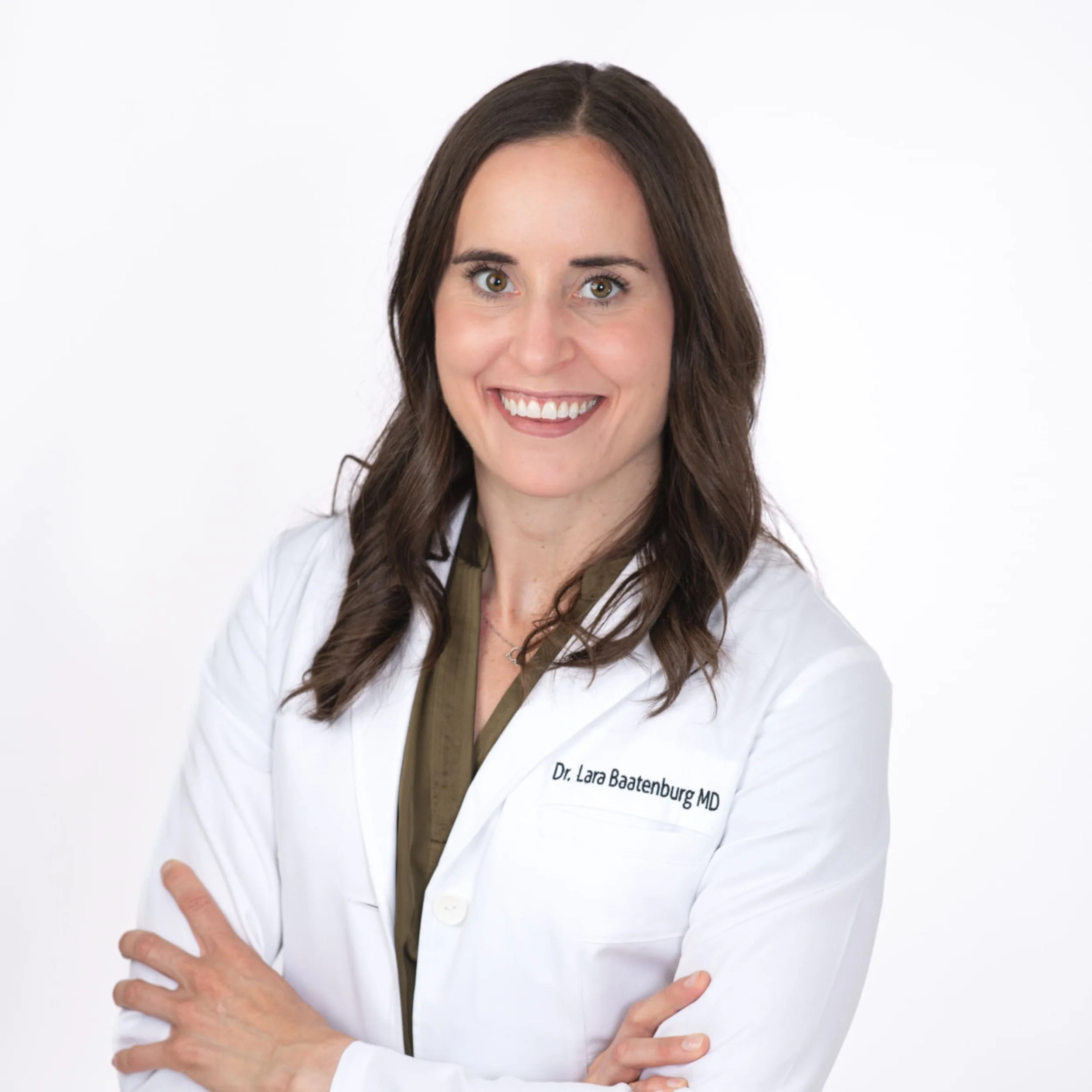
In this episode of Vitals & Values, Dr. Larkin joins Dr. David Roden and Dr. Lara Baatenburg for a wide-ranging conversation on how menopause care got to where it is today, where it's still falling short, and what modern personalized medicine makes possible for women who are finally getting the attention they've always deserved.
How We Got Here: The Evolution of Menopause Treatment
Hormone therapy has had a complicated few decades. For much of the late twentieth century, it was widely prescribed. Then came the Women's Health Initiative study in 2002, and almost overnight, prescription rates collapsed. Physicians stopped offering it. Patients stopped asking. An entire generation of women entered menopause with little support and a great deal of fear.
What followed was years of scientific re-examination. Researchers and clinicians began to look more carefully at the WHI data — who the participants actually were, what types of hormones were studied, and what the findings did and did not show. The picture that emerged was considerably more nuanced than the headlines suggested. Timing mattered. Age at initiation mattered. Formulation mattered.
Dr. Larkin discusses how the medical community has worked to recalibrate, why that process has moved slowly, and what it means for women who were caught in the gap between what we thought we knew and what the evidence actually supported.
What Social Media Is Getting Right — and Wrong
Something significant has shifted in the last several years. Women are talking about menopause openly, publicly, and at scale in ways that simply didn't happen before. Perimenopause, hormone therapy, libido, sleep disruption, brain fog — topics that once lived in hushed conversations between close friends are now regular subjects of podcasts, Instagram posts, and TikTok videos with millions of views.
That visibility is genuinely valuable. It reduces shame. It validates experiences that medicine spent years dismissing. It has driven women into their doctors' offices armed with questions they never knew they were allowed to ask.
But the information environment is not clean. Misinformation moves quickly. Fringe protocols, unsupported claims, and products designed to profit from confusion are mixed in with legitimate science in ways that can be nearly impossible for patients to sort through. Dr. Larkin talks about what she sees in her practice — patients arriving with both better questions and more misconceptions than ever before — and how she approaches the conversation when social media has already shaped what a patient believes.
Personalized Medicine and What Concierge Care Changes
Standard medical practice is not designed for complexity. A fifteen-minute appointment every year is not enough time to properly evaluate a woman's full hormonal picture, understand her history, and develop a treatment plan that actually fits her life. For women navigating perimenopause and menopause, that time constraint has real consequences.
Concierge and personalized care models change the math. More time, more access, and a relationship that develops over years rather than restarting every time a patient sees a different provider — these aren't small things. They're the conditions under which good menopause care actually becomes possible.
Dr. Larkin speaks to what it looks like when a physician has the time and relationship to treat the full patient rather than the presenting complaint. Hormone decisions that account for cardiovascular history, bone density, mental health, and sexual health together. Follow-up that isn't six months away. A care model where a woman doesn't have to start over from scratch every time she needs help.
Why This Moment Matters
More women are reaching midlife with higher expectations of what their healthcare should look like. They've done the research. They've listened to the podcasts. They know what questions to ask, and many of them are no longer willing to accept the answer "this is just part of aging."
That shift matters. It means there is both more demand and more opportunity for medicine to actually meet women where they are — with individualized care, honest conversations about hormones, and a long-term view of women's health that treats midlife as a critical window rather than a transition to manage.
Dr. Larkin has been doing this work long enough to see how much has changed and to understand how much still needs to.
Vitals & Values is the podcast of Concierge Medicine of West Michigan, hosted by Dr. David Roden and Dr. Lara Baatenburg. New episodes available wherever you listen.