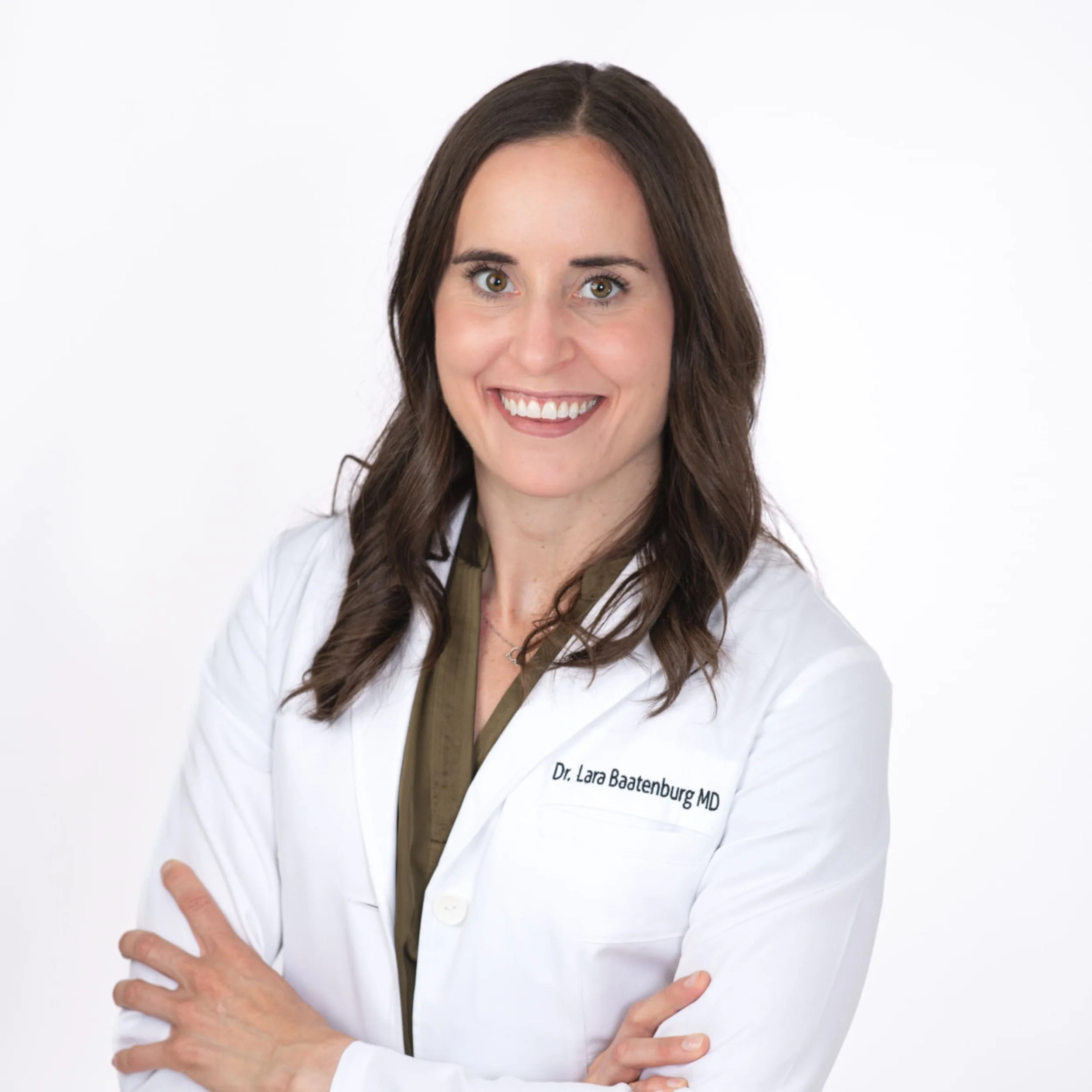
"Is European Food Actually Healthier?" | What We Learned from Our Italian Honeymoon
LISTEN ON APPLE PODCASTS | LISTEN ON SPOTIFY | LISTEN ON AMAZON MUSIC
There's a piece of travel folklore that gets repeated constantly: go to Italy, eat whatever you want, and somehow come home lighter. David decided to actually test it. Real data, before and after. Dr. Lara and David spent their honeymoon between Rome and Sicily, and this episode is both a trip recap and an answer to a question that turns out to matter more than most people think.
Why Italy, and why not a cruise
Both had visited Italy separately years earlier and loved it enough to want to go back together — David to Rome and the Amalfi Coast, Dr. Lara to Rome, Tuscany, Cinque Terre, and Florence. A Mediterranean cruise came up as an option during planning. They passed. The appeal of a cruise is covering more ground, but the tradeoff is doing every stop as a tourist rather than actually settling into a place. They wanted the version where you remember which gelato shop you liked, not just which port you docked at.
The trip split into six days in Rome and six in Sicily.
Rome: the Vatican, the Colosseum, and a very good decision to watch Gladiator
The big sights got covered — the Vatican, St. Peter's Basilica, the Colosseum — but the standout day combined a few smaller choices that turned out to matter more. After visiting the Colosseum, they ordered pizza, picked up dessert, and watched Gladiator in their hotel room. It sounds like a low-key evening. Given the 90-degree heat and roughly 16,000 steps a day they were logging, it was also exactly the kind of rest that made the rest of the trip sustainable. Taking a mid-afternoon break to nap through the hottest part of the day became their standard rhythm for the whole week.
The best food of the Roman leg came from a recommendation, not a guidebook — an old-school, unglamorous restaurant the hotel concierge described as where locals and regulars actually eat. The carbonara there outclassed everything else on the trip. A rooftop dinner at a former Michelin-starred restaurant, arranged after asking the concierge directly, was the other standout — elegant, expensive, and worth it for a honeymoon.
The most memorable food moment, though, wasn't fancy at all. A sandwich grabbed from a corner shop near the Pantheon, eaten sitting on the steps outside. Sometimes the best meal isn't the reservation — it's the one that requires no plan at all.
One consistent letdown: the coffee. Despite Italy's reputation for espresso culture, the flavor profile stayed largely uniform — dark, deep, and without much variation from shop to shop. It took real searching to find a café with the kind of nuanced, specialty coffee more common in the American third-wave scene.
The e-bike tour that changed how David thinks about travel
Of everything in Rome, an e-bike tour along the Appian Way stood out as the trip's best single day. Riding through the old Roman road system on high-end e-bikes gave access to catacombs, an ancient working aqueduct, farmland, and neighborhoods well outside the typical tourist path — the version of Rome that isn't the historic downtown. It was physically effortless in a way that let them actually take in the surroundings instead of managing a heart rate. It's officially become a standard they plan to replicate on future trips.
Sicily: stairs, shopping, and a volcano
Sicily started in Taormina, a hillside town connected to the coast by roughly 830 stairs — a serious test for David's chronic knee issues, compounded by a thrown-out back and ongoing Achilles tendinitis from earlier in the trip. He made it. The payoff was worth the climb: a stretch of centuries-old buildings lined with high-end shops, plus several genuinely excellent meals.
A hike into a canyon nicknamed Sicily's answer to the Grand Canyon delivered waterfalls and swimming holes at the bottom, undertaken in punishing midday heat. A boat tour with prosecco flowing throughout produced one of the trip's better conversations — with an Australian epidemiologist met on board, in town after a medical conference.
The trip closed in Syracusa, staying near the ancient island town of Ortigia — continuously inhabited for roughly 2,500 years — with beach time, seafood, more pizza, and one final gesture from hotel staff who made sure a bottle of house-specialty prosecco found its way to the couple's balcony after an initial mix-up.
The part that actually answers the question
Here's where the myth gets tested directly. David got an InBody body composition scan before the trip and another after two weeks in Italy. The result: he gained six pounds of fat and lost four pounds of muscle — despite averaging around 16,000 steps a day.
The explanation isn't complicated once you look at what actually happened. Breakfast, lunch, and dinner, every day, plus dessert. Pastries were a standard breakfast option throughout the trip. Wine and Aperol spritzes were part of nearly every meal. As David puts it, honeymoon calories didn't register mentally — they registered on the body regardless.
Dr. Lara pushes back on a related piece of the myth too — the idea that European food is inherently fresher or cleaner than what's available in the U.S. Fresh, high-quality produce is available at home, at farmers markets and grocery stores alike. The perceived difference often comes down to where people choose to eat when traveling versus where they choose to eat at home — an elegant outdoor restaurant abroad gets compared to a fast-casual chain locally, which isn't really a fair test of "European food" against "American food."
The takeaway that matters clinically: locals were not uniformly thin. Both David and Dr. Lara noticed heavier-set Italians and a lot of smoking throughout their trip. Calories, portion sizes, and overall intake determine weight change everywhere — the geography doesn't change the physiology.
What travel does to a routine, and why that's okay
Dr. Lara went roughly two weeks without a structured workout for the first time in a long while — a handful of runs aside, no consistent training. She admits it was a genuine adjustment for someone used to a regular routine. The reassuring part: getting back into her lifting routine after returning home wasn't difficult. A break doesn't erase the foundation, especially when the routine was solid before the trip.
David's approach was different — no exercise at all during the two weeks, no attempt to maintain one, and no particular concern about it. Both agree on the larger point: an established routine survives a two-week interruption. The panic some people feel about "losing everything" on a break usually isn't warranted, provided the habits were real to begin with.
What's worth repeating
David's two takeaways for future trips: e-bike tours, permanently, and asking locals for rooftop bar and dinner recommendations wherever they travel next. Both turned an ordinary sightseeing day into something considerably better, and both came from being willing to ask rather than defaulting to whatever a guidebook suggested.
As for the central question — does European food make you healthier — the honest answer is no, not inherently. What changes on a European vacation is usually behavior: more walking, smaller default portions in some settings, different daily rhythms. None of that is unique to Italy. It's available anywhere, including at home, if the same choices get made.
Vitals & Values is the podcast of Concierge Medicine of West Michigan, hosted by Dr. David Roden and Dr. Lara Baatenburg. New episodes available wherever you listen.